
M11 introduced 3D contact between meshed bodies. M12 opens the
third optional specialization: connecting two SOLID185
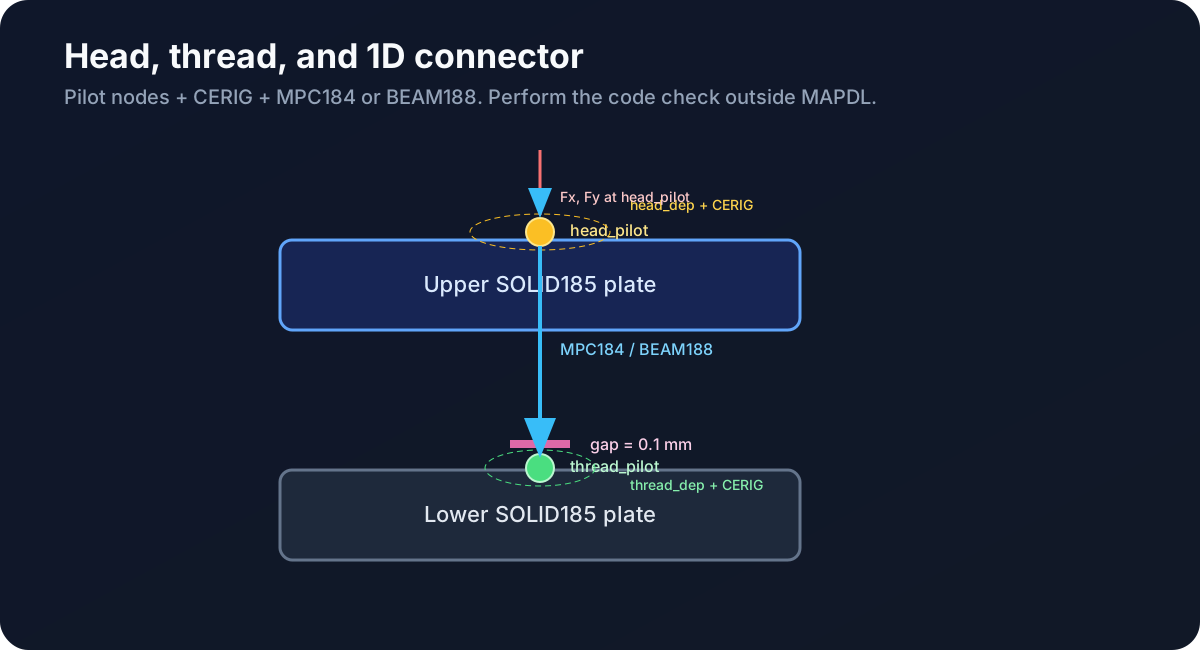
plates through pilot nodes, rigid regions with CERIG, and a comparable
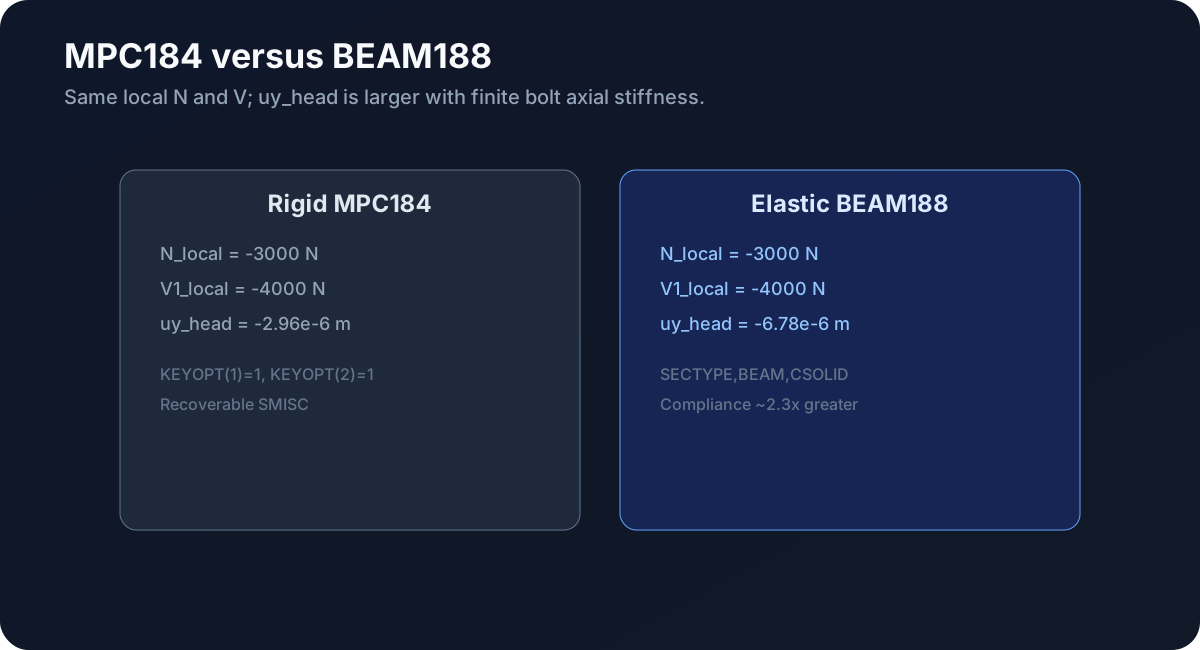
1D connector (MPC184 or BEAM188). You will extract local forces
to CSV for checking the bolt outside MAPDL under the applicable standard.
Your mission
You will idealize the head and thread with two pilot nodes, compare a rigid connector with an elastic one, and document equilibrium and forces with reproducible CSV evidence.
Guiding question: can you prove that the load passes through the bolt rather than through a numerical bond between the plates?
Objectives
After completing M12, you will be able to:
- Select nodes captured by the head and thread using auditable components.
- Apply
CERIG,pilot,ALL,UXYZto captured regions of three-dimensional solids. - Build
MPC184(Lagrange KEYOPT) andBEAM188(CSOLID) connectors. - Avoid accidental bonding with a documented
interface_gap. - Extract connector
SMISCresults and interpret the local 1D coordinate system. - Export forces to CSV for code verification outside the model.
Prerequisites and downloads
- M03:
BEAM188, sections, and beam degrees of freedom. - M06: global equilibrium and reaction summation.
- M02: selection with
NSEL,CM, andSELTOL. - M11 (recommended): gap criteria and diagnosis before trusting stresses.
12_start.mac— starting point.12_bolt_connector.mac— audited deliverable.12_bug_hunt.mac— five faults.12_challenge.mac— verifiable challenge.12_expected_results.csv— numerical contract.bolt-pilot-cerig.svg— head/thread diagram.mpc-vs-beam188.svg— connector comparison.
How to use this lesson
| Path | Duration | Coverage |
|---|---|---|
| First win | 20–25 min | Geometry, CERIG, MPC184, and the first force CSV. |
| Complete | 70–75 min | BEAM188, comparison, debugging, challenge, and mastery. |
Session map
- Mission: objectives, downloads, and prediction.
- Mental model: pilots, CERIG, connectors, and external standards.
- Demonstration: gap, selection, solution, and CSV.
- Debugging: five common faults.
- Challenge: stiffness or effective length.
- Mastery: final M12 test.